








This weekend, it is time for the annual recognition of the legacy of Dr. Martin Luther King. Without a doubt his legacy is far reaching, not only did he create the path for Barack Obama to be president, he also has had a lasting impact on every civil rights movement since the 1960’s.
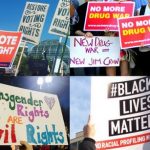
Every movement for civil rights in this country looks to the Civil Rights Move-ment for inspiration. Whether it is the feminist movement of the 70’s or the LGBT equality movement of today, activists always look to the leadership of Dr. King.
King burst onto the national scene with the bus boycott in Montgomery, Alabama, after Rosa Parks infamously refused to give up her seat. His successful non-violent protest to discrimination is legendary. Of course, most importantly, it was successful.
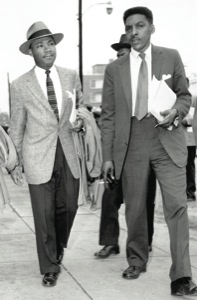
What many do not know is there was an openly gay man actively involved in the Montgomery protest, who was also the architect of the March on Washing-ton. The older Rustin was a counselor to King and helped him shape his non-violent direct actions against discrimination that were fashioned on the principles of Mahatma Gandhi.
While King deserves the credit for the success of the Montgomery boycott and the passage of the Civil Rights Act of 1963, Bayard Rustin’s role can no longer be ignored. In the late ‘50s and ‘60s, being an open homosexual was not taken lightly. The fact that Dr. King continued to support Rustin as a key advisor in the Negro movement for equality speaks volumes about King’s character.
King lived the adage from his I Have a Dream speech, he judged Rustin not by his homosexuality but by the content of his character. King’s support of Rustin was met with great opposition by many Black ministers of the day. They were afraid that Rustin’s homosexuality and involvement would undermine the support of Negro equality. Their fears were realized when Senator Strom Thurmond said on the Senate floor concerning the proposed March on Washington that it was being organized by a “Communist, draft-dodger, and homosexual.” He also produced an FBI photograph of Rustin talking to King while he was bathing; the implication that there was some sort of same sex relationship going on.
Of course, we now know that good ‘ole boy Strom had already fathered an illegitimate child by an African American woman, yet he was still railing against the civil rights movement. Some people are just too screwed up to even begin to attempt to psychoanalyze.
Nonetheless, Rustin remained a key player in the Civil Rights Movement and was the architect of the March on Wash-ington in 1963. While many believe that to be King’s March on Washington, nothing could be farther from the truth. The march was the brainchild of Rustin and activist A. Phillip Randolph, Rustin’s mentor. King was simply one of the many speakers at the event.
Unfortunately, at the time Rustin was not given his just due. He was only allowed a very minor speaking role at the event itself, because he was openly gay.
Many in my African American and LGBT communities have never heard of Bayard Rustin, but it is high time they did. I believe many African Americans might feel differently about the “gay issue” if they knew that a gay man was responsible for one of the seminal events in their civil rights history.
I also think that the LGBT community might think differently about the civil rights movement knowing that one of our own was the cornerstone of the March on Washington. Our community should celebrate Bayard Rustin’s legacy just like the nation celebrates that of Dr. King.
Rustin’s relationship with Coretta Scott King and civil rights leader Dorothy Height clearly laid the path for their staunch support of LGBT rights in later decades. Being open and honest about who you are can really make a difference and Bayard Rustin is a true testament to that belief.


