










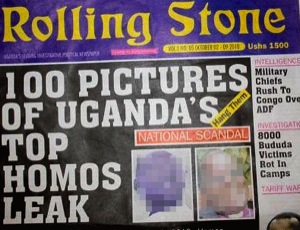
Uganda’s high court has re-leased a ruling permanently prohibiting the tabloid Rolling Stone (no relation to the U.S. publication of the same name) from continuing its public vigilante campaign against the country’s LGBT community. The ruling was signed on December 30 by Judge Musoke Kibuuka.
Judge Kibuuka found that the actions of Rolling Stone violated the privacy and human dignity rights of LGBT Ugandans, as well as their protection from inhuman treatment.
Rolling Stone’s argument was based upon the fact that as homosexuality is illegal in Uganda, the claimants were not eligible for protection because they were criminals.
The court rejected this argument, “It must be noted that this application is not about homosexuality per se, it is about fundamental rights and freedoms. However, the court did not agree that section 145 of the Penal Code Act renders every person who is gay a criminal under that section of the Penal Code Act. The scope of section 145 is narrower than being gay generally. One has to commit an act prohibited under section 145 in order to be regarded a criminal.”
This case does have worrying implications for the proposed Anti-Homosexuality Bill, which supporters are seeking to make law. The bill will greatly expand the definition of what constitutes homosexual behavior far beyond a sexual act. It will also criminalize advocacy on behalf of LGBT people and make criminals of family members who refuse to report their loved ones to police. If that bill were to become law, merely bringing this case to court and arguing in defense of LGBT people could be taken as “promotion” of homosexuality. This could lead to fines and a sentence of between five to seven years. The Anti-Homo-sexuality Bill may be brought to a vote during a lame-duck session of Parliament following the February 18 elections.


