










In 1961, gay men and lesbians could be arrested for dancing together in bars, or for kissing in public. Homosexuality was considered a mental illness. There were no openly LGBT elected officials, no LGBT characters on television and no laws to protect the lives of LGBT people from harassment, discrimination and even murder.
The dark cloud of the McCarthy era still loomed large over the United States, and LGBT people and bars were frequent targets for police harassment, entrapment and raids. Even in San Francisco.
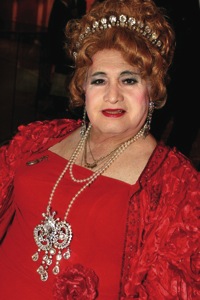
It was then and there that a World War II veteran named José Julio Sarria made history. Sarria had spent the 1940s and ‘50s entertaining crowds with his arias and wicked sense of humor, primarily at The Black Cat, a gay bar on Montgomery Street. In 1961, he stepped onto a stage that no LGBT person in America had stepped onto before. He ran for the office of San Francisco supervisor.
Sarria was not elected, but placed ninth in a field of 32 candidates, garnering approximately 5,500 votes in the citywide election (board members would not run in districts until the next decade). While he was not victorious, Sarria set the stage for Harvey Milk to win a seat on the Board of Supervisors 16 years later.
And, he had sent a message to the gay community that it could be a powerful force.
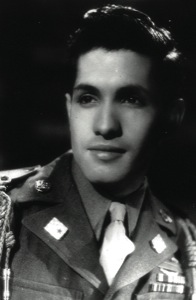
“Through his vision and his imagination, José Sarria saw a world of possibilities for gay people,” said Coco LaChine, a longtime leader and empress in the International Court System in New York and Los Angeles. “He believed that we should stick together and help each other. That was the reason he decided to run for public office – the first openly gay person to do so. He was tired of being treated as a second-class citizen, the constant harassment of gay people and everyone telling him what he could not do. He was determined to show that world that he is just as good.”
“José is the Rosa Parks of the gay rights movement,” said Nicole Murray Ramirez, a San Diego city commissioner who knew Sarria for more than 40 years. “When she was taking her stand and refusing to go to the back of the bus, he was taking his out here on the West Coast. I have read a lot more about Rosa Parks in recent years, and her response when people would ask her why she did what she did, she said, ‘I was tired, and I was tired of being treated like a second-class citizen.’ José said that, too.
“When he ran for public office, he said he was running because he was tired of being treated like a second-class citizen,” Murray Ramirez continued. “He was very proud that he was gay. He was very proud that he was a veteran. He was very proud that he was Latino. He was an activist in that environment; such courage. It took a very courageous man to run for office openly in 1961.”
The ‘Nightingale of Montgomery Street’ becomes an empress
But Sarria’s inspiring run for office did nothing to alleviate the police harassment still faced by gay people, and in particular, gay bars. In the face of continued police pressure, the Black Cat closed in 1963, and soon after, five other bars were also closed by the police. According to the International Court System, there were 30 gay and lesbian establishments in 1963, and by 1964 only 18 remained.
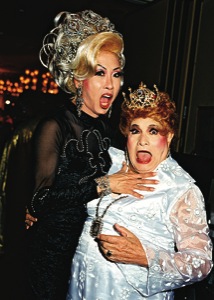
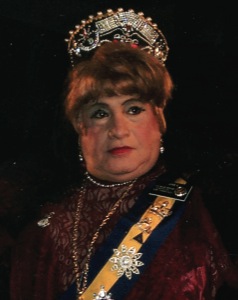
Teaming up with bar owners, Sarria helped organize the Tavern Guild of San Francisco in 1965, which produced the city’s first public drag ball, the Beaux Arts Ball. At its third annual event, more than 500 LGBT community members braved police lines and the floodlights and flash bulbs of the police to attend. That night, Sarria was named queen of the ball.
“He was going to be named queen of a ball up in San Francisco, but decided there were ‘enough queens in San Francisco,’ and that she wanted to be an Empress,” Murray Ramirez recalled. “The rest is history.”
The Tavern Guild’s annual drag ball became the place for the annual election of the next empress to succeed Empress I José. From this, Sarria designed and launched the Imperial Court of San Francisco, which initially raised funds for gay charities through drag shows. As the years went on, Imperial Court chapters were founded in Vancouver, Portland, San Diego, New York, Toronto and more – today, the Court boasts 70 chapters throughout Canada, the United States and Mexico. It has expanded its philanthropic focus through the years, contributing millions of dollars to LGBT organizations, HIV/AIDS organizations, health care organizations and youth and family causes.
“Because of this idea of the Court System, José opened the world to me and thousands of courtiers in the United States and Canada to be the best that we can be,” LaChine said. “The Court System has also been rooted in philanthropy and community service, while still having fun! When the AIDS crisis first appeared, it was the Court System that was on the forefront of fundraising and it continues to this day. The Court System has given me personally a newfound identity, family and a venue to pay it forward.”
“He created the entire Court System,” said Murray Ramirez, named first in line to Sarria’s throne when the Empress named her line of succession. Active in the Court for decades, Murray Ramirez is queen mother of the Americas and executive director of the International Court Council. “These courts have raised millions of dollars for charity. And for one night, you can dress up and live in a fantasy. He gave us a fantasy, and an organization that does much good. We get to be kings and queens. What José created was a family that has now been going on for nearly 50 years. All of it is her legacy.”
A lasting legacy
“I believe it is incumbent on all of us who were fortunate enough to know him, to keep his legacy alive. Too many young people do not know the struggles of those who came before us, and we need to keep this history going,” LaChine said. “José opened the door of possibilities for us, we need to walk through it and keep it open for the next generation.
“José taught me that everything is possible, and that we need to take chances. José taught me how to be fabulous and not to accept second best,” LaChine continued. “José also frequently reminded us, ‘United we stand, divided they will catch us one by one.’”
The International Court System that Sarria founded is committed to ensuring his contributions are noted and that his legacy continues.
“We talked about our dying,” Murray Ramirez said. “He didn’t just want to be the guy who wore a dress. He did think about that. Any activist or leader sometimes has to think, ‘All this work, all this sacrifice; will people remember?’”
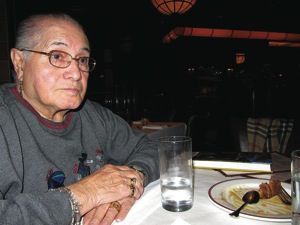
In fact, Sarria himself had said, “I want to be remembered not as the little Latin that sat on table tops and sang God Save the Nelly Queens. I think I’ve done a little bit more in this world. I want to be remembered for the good things that I’ve done. I have achieved something. I was the first. I was the first to organize a gay non-profit corporation in the state of California. I did it. It was The League for Civil Education. And that became SIR, the Society for Individual Rights.”
“It falls to us to continue the battle to have him recognized. It’s important that we remember her,” Murray Ramirez said. “We forget our history. This was our first person who made Tammy Baldwin and all the others possible. This was a dedicated soul, a trailblazer, a pioneer. José was not just important to our community, but also to the Latino community. He was also a reminder of our greatest gifts – camp and a sense of humor. Without those, we wouldn’t have been able to get through some of the darkest hours of our movement.
“My main goal is to make sure his legacy lives,” Murray Ramirez said. “We have these great trailblazers but we don’t know about them; these people who built our community and whose shoulders we stand on. The reason you can get married and be protected by non discrimination laws is because they built this community, and they took their lives into their own hands to do it.”
One of the ways Court members and others are trying to ensure Sarria’s place in history is by nominating him to the California Hall of Fame, which only has two LGBT inductees, Harvey Milk and Billie Jean King. For more information on how to get involved in that effort, visit www.impcourt.org.
Some biographical information courtesy of the International Court System. To read more about Sarria, check out “The Empress Is a Man.” (Haworth Press, 1998)


