










For those that don’t know, the Gay, Lesbian and Straight Education Network (GLSEN) – the people who brought you Gay-Straight Alliances (GSA), the No Name Calling Week and the National Day of Silence – has a San Diego County chapter.
If you didn’t know about it, you aren’t the first, and it isn’t surprising. The local chapter works primarily backstage – away from the public – albeit diligently, to support the County’s more than 60 GSAs and train San Diego Unified School District (SDUSD) teachers on how to confront bullying and improve its treatment of LGBT youth.
But no one is tooting their horn, which chapter Co-Chair Chet Sewell attributes to the chapter being a group of mostly educators “used to just getting in there and doing the job.” We thought this was a good reason, among many others, to profile the chapter. We discuss its inner-workings, its work with GSAs, its teacher trainings, finances and its plans for the future.
Its inner-workings
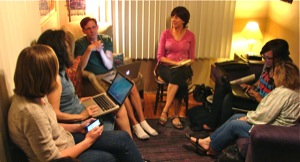
The GLSEN chapter is managed by an all volunteer-based executive board, which includes two co-chairs, a secretary, a treasure and four committee chairs; one for a GSA program, one for teacher training and two others for fundraising. There is no physical building that houses the chapter; its meetings are held at The San Diego LGBT Community Center. The board relies on a pool of 20 to 30 dedicated volunteers.
A typical work week for the chapter’s co-chairs and coordinators involve a mix of sending out emails, making phone calls and planning upcoming events and trainings.
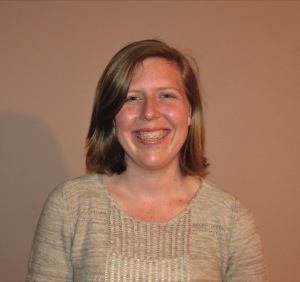
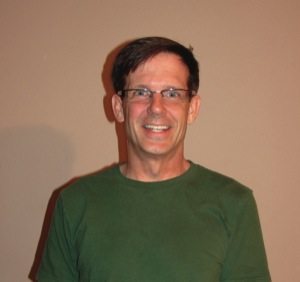
“Colin [Pearce, chapter co-chair] and I are communicating with SDUSD, GLSEN national and other educational entities along with filling out grants, organizing fundraisers and overseeing the GLSEN committees,” Sewell said. “While David [Lyons, coordinator of the chapter’s GSA leadership program called Jump-Start] is usually communicating with the GSA advisors via email or phone calls, planning for a social that a GSA is sponsoring at their school and inviting other GSAs to come.”
Unlike other chapters, which receive phone calls and emails from parents and students wanting to know more, such as PFLAG San Diego County, GLSEN is the opposite.
“Its mostly us seeking out advisors and offering them our support,” Sewell said.
Not much is known about how the chapter arose, which Sewell says happened in the mid to late ’90s, beyond the story of how Mick Rabin, local elementary teacher and active member of the chapter, got involved in the early ’00s. Rabin, who had been in the Boy Scouts as a kid, started affiliating with Scouting for All, a group that advocated for ending the Boy Scouts ban against LGBT people from its membership.
“There was a guy in Scouting for All who also happened to be in GLSEN, and I went to a meeting because I was curious,” Rabin said. “That was 11 years ago and I haven’t stopped going since.”
GSAs
GSAs, student-led groups that provide safe and supportive environments for LGBT students and their allies, are the chapter’s bread and butter. GLSEN does not control or manage the GSAs – they are started and run by students who must follow their school’s policy on student organizations. Rather, GLSEN provides GSAs with assistance, materials, training and help with any concerns.
“We provide them with resources that help them observe their days of actions, day of silence and the No Name Calling Week. We also provide them with the necessary resources to kind of help their supportive environment, kind of structuring it and kind of helping the school be more accepting of them,” Lyons said. “At the same time, we help them connect to other GSAs, which provides them with networking opportunities as well as social activities by hosting a number of events, like the ice skating event we have every year.
“We also have educational as well as activity related events, such as the Safe School Summit, the GSA awards ceremony, which is coming up and helps support GSAs financially,” Lyons added.
At present there are 66 GSAs in San Diego County, mostly in high schools with a much smaller number in middle schools. The alliances are equally spread out across the County says Sewell, adding that the North County LGBT Center does some of the coordination with GSAs in the northern part of the County.
One route through which the chapter supports GSAs is through a program called Jump-Start. According to Lyons, the program’s coordinator, Jump-Start trains and educates GSA leaders to become more effective leaders and advocates at their schools and communities.
“We provide them with the tools and training to become more knowledgeable of the environment, and the terminology and issues going on nowadays, as well as train them on the different solutions or the ways they can go about pushing for change in their own schools,” Lyons said.

Arianna Segla, who went through the Jump-Start program and is now its student coordinator, says the program helped her become more confident, outgoing and knowledgeable of LGBT issues.
“Before Jump-Start, I wasn’t as outgoing as I am now. Now I go up to people, introduce myself, talk about what I’m for, and make connections,” Segla said. “I’ve also been able to bring [what I learned in Jump-Start] into my school and the schools that I’ve been to and explain to them, ‘You know what? This is what you need to do.’ It’s not something like, ‘Hey, maybe we should do this.’ It’s more like, ‘This is what needs to happen in our schools.’”
Training
If it weren’t enough to support the County’s numerous GSAs, the chapter also trains San Diego Unified School District teachers on how to create safer, respectful environments for LGBT students. GLSEN, locally and nationally, tackles the issue differently depending on the level of education.
For elementary teachers, GLSEN trains teachers how to respond and stop bullying, verbal harassment or everyday forms of anti-LGBT language, such as ‘That’s so gay.’ The substance of the elementary teacher trainings come from a toolkit called, Ready, Set, Respect!, produced by GLSEN national.
Some of the strategies, outlined in the toolkit include how to intervene when bullying occurs and how to engage bystanders. The trainings also provide teachers with lesson plans and suggested ideas for tackling such topics as gender identity and expression; the idea being that kids need to be taught to accept and affirm gender difference and diversity, which can lead to more safe and affirming school climates for LGBT students.
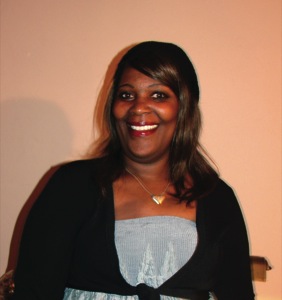
“The middle and high school training focuses on creating allies for LGBT students and ways to make one’s school more welcoming and affirming for all students,” said Irina Segade, co-coordinator of the chapter’s teacher trainings.
The substance of the secondary school training comes from another GLSEN national publication, called Safe Space Kit.
The toolkit focuses on informing educators about LGBT students’ experiences with harassment and assault, educating them on existing laws that protect LGBT students against bullying and harassment, and advises teachers on how they can become allies.
The chapter has been providing the training to San Diego Unified School District teachers since 2012, roughly a year after the district passed its anti-bullying policy, which the chapter helped draft. Segade estimates that about 400 educators have been trained thus far.
Finances
Training SDUSD teachers and supporting GSAs takes its toll. The chapter keeps itself financially sound through fundraisers, memberships and grants.
The chapter relies on fundraisers for 20 percent of its income.
“We do a couple of fundraisers a year. One is our lasagna dinner sponsored by the Big Kitchen in South Park. Judy ‘the Beauty’ Forman opens up her restaurant for us to do a fundraiser there in the fall,” Sewell said.
The chapter receives the majority of its income, 70 percent, from grants.
The chapter receives its grants through variety of nonprofit organizations and businesses, such as San Diego Pride and SEMPRA Energy, who both gave $2,000 grants recently, and the Human Dignity Foundation, who granted $5,000 a few years back.
The rest of its income, 10 percent, comes from memberships.
“People can become members of GLSEN,” Sewell said. “They can do it either locally or through the national and then we get a percentage of it.”
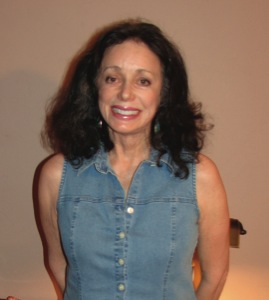
Its unclear how many members the local chapter has as the national branch took over that responsibility a couple of years ago, but David Piergrossi, chapter treasurer, estimates its roughly 100.
Future
Finances aside, in the coming years, as the chapter continues to provide education and resources to students and teachers in San Diego Unified, Sewell sees the chapter widening its scope.
“In five years we hope to see ourselves expanding our training beyond the San Diego Unified School District to include all of the school districts in the County,” Sewell said.
Chet additionally wants the chapter to increase its support of GSAs.
“We hope to be even more active with the GSA’s providing them with more resources, social events and other activities,” Chet said.
Further down the road, Sewell would like to see the day GLSEN fully accomplish its goal.
“We’d like to see no need for a GLSEN,” Sewell said. “It would be awesome to think that GLSEN would no longer be necessary in a world that embraced all diversity and created safe schools for all students.”


@GLSEN hard at work in #SanDiego County http://t.co/NLOvjWpBPq #lgbt #Youth #Gay #GSA
RT @LGBTWeekly: @GLSEN hard at work in #SanDiego County http://t.co/NLOvjWpBPq #lgbt #Youth #Gay #GSA
RT @LGBTWeekly: @GLSEN hard at work in #SanDiego County http://t.co/NLOvjWpBPq #lgbt #Youth #Gay #GSA
Local organizers making an impact: RT @LGBTWeekly: @GLSEN hard at work in #SanDiego County http://t.co/RCWzoq1052 #lgbt #Youth #Gay #GSA
RT @glsen: Local organizers making an impact: RT @LGBTWeekly: @GLSEN hard at work in #SanDiego County http://t.co/RCWzoq1052 #lgbt #Youth #Gay #GSA
RT @glsen: Local organizers making an impact: RT @LGBTWeekly: @GLSEN hard at work in #SanDiego County http://t.co/RCWzoq1052 #lgbt #Youth #Gay #GSA
RT @glsen: Local organizers making an impact: RT @LGBTWeekly: @GLSEN hard at work in #SanDiego County http://t.co/RCWzoq1052 #lgbt #Youth #Gay #GSA
RT @glsen: Local organizers making an impact: RT @LGBTWeekly: @GLSEN hard at work in #SanDiego County http://t.co/RCWzoq1052 #lgbt #Youth #Gay #GSA